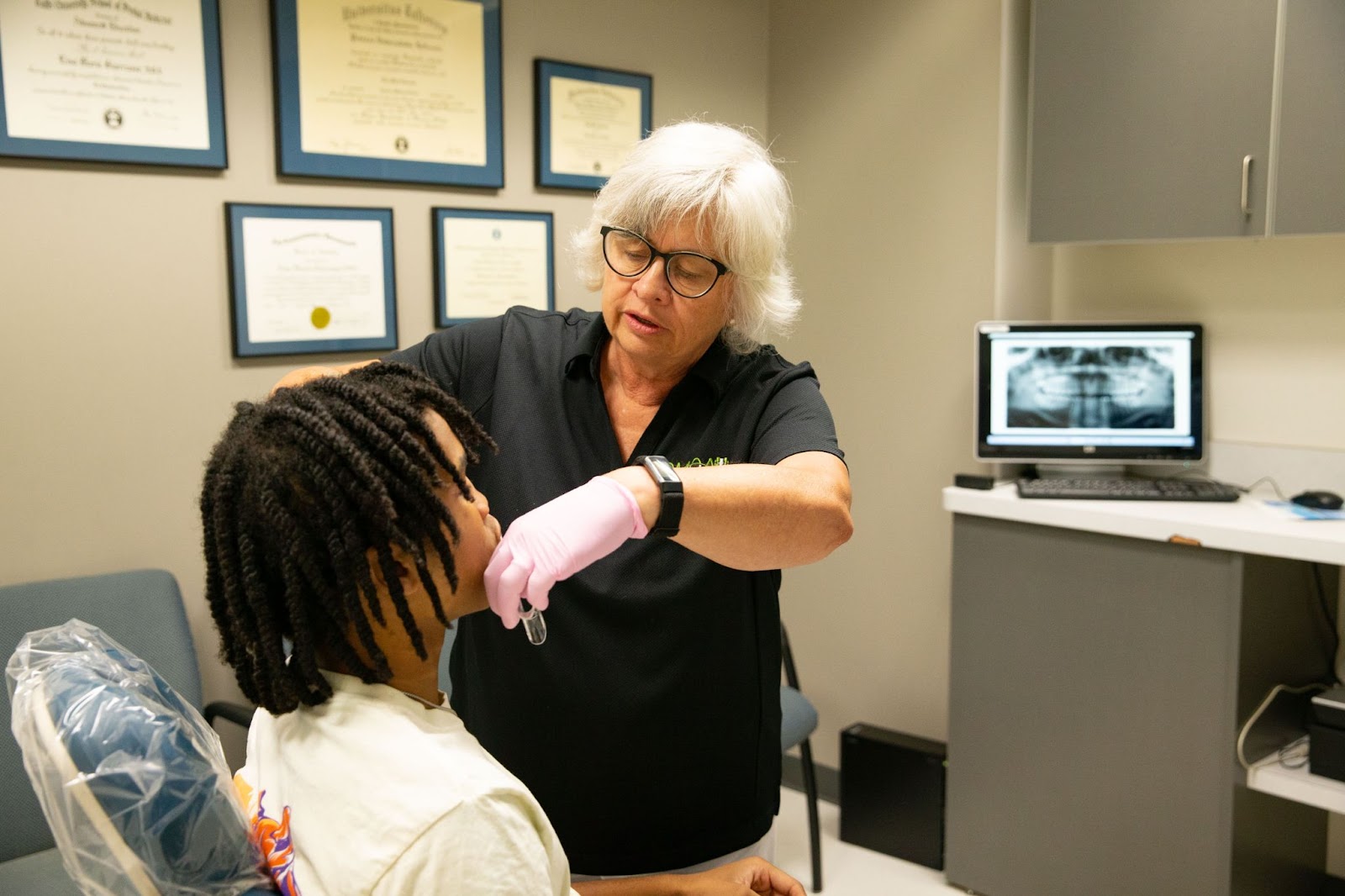
If you’re wondering how long you need to wear a retainer after braces, you’re asking exactly the right question. A retainer is a custom-made oral appliance that holds your teeth in their new position after braces or Invisalign. Wearing your retainer is essential because teeth naturally want to shift back toward their original spots, a process called relapse. Retainers protect the beautiful smile you worked so hard to achieve.
Think of your retainer as the final step in your smile journey. Braces or clear aligners do the heavy lifting of moving your teeth, but the bone and tissue around those teeth need time to settle. Without retention, all that careful work can slowly come undone.
At CMOA, Dr. Giarrusso or Dr. Livanos will fit you with a retainer designed just for you at the end of active treatment.

How Long Do You Need to Wear a Retainer After Braces?
Most patients wear a retainer full-time for the first 3 to 6 months after braces come off, then switch to nighttime-only wear indefinitely. Retention is a lifelong commitment because teeth can shift at any age. Wearing your retainer nightly, even years later, is the best way to keep your smile straight.
Here’s a general timeline of what to expect:
- First few months: Full-time wear, typically 22 hours a day, removing only for meals, brushing, and cleaning
- Months 4-12: Gradual shift to nighttime-only wear, based on your orthodontist’s guidance
- Long-term: Nighttime wear a few nights per week, continuing for life
Your specific timeline depends on several factors, including how complex your case was, your age, the type of retainer you wear, and how your teeth respond. Bigger corrections often need longer full-time retention, and younger patients who are still growing may need an adjusted schedule. Fixed retainers stay in place around the clock without you thinking about it, while some smiles simply settle faster than others.
Dr. Giarrusso or Dr. Livanos will build a retention plan based on your unique bite and the work you completed. Skipping nights or losing your retainer for weeks can allow teeth to drift, so consistency really is everything.
Why Wearing Your Retainer Matters
Wearing your retainer matters because it prevents relapse and preserves the alignment you earned during treatment. Consistent wear protects everything you accomplished. Here’s what your retainer does for you:
- Prevents relapse: Keeps teeth from drifting back to their original crowded or spaced positions
- Protects your investment: Braces and Invisalign take months of care and effort. Retainers preserve that work.
- Maintains your bite: Holds your upper and lower teeth in proper alignment for chewing and speaking
- Supports oral health: Straight, aligned teeth are easier to clean, reducing risk of decay and gum issues
- Keeps your smile confident: No surprise gaps, crowding, or shifting years down the road
Everyone deserves a beautiful smile, and your retainer is the tool that keeps yours looking exactly the way you want it for years to come.
Types of Retainers: Fixed vs. Removable
There are three main retainer types: Hawley, clear, and fixed. Each has its own strengths. Dr. Giarrusso or Dr. Livanos will help you pick the right style for your smile and lifestyle.
| Retainer Type | Description | Visibility | Durability | Care |
|---|---|---|---|---|
| Hawley | Acrylic base with a thin metal wire across the front teeth | Visible wire | Very durable, adjustable | Easy to clean, long lifespan |
| Clear | Thin, transparent plastic that fits over your teeth like an aligner | Nearly invisible | Moderate, may need replacement over time | Rinse and brush gently, avoid heat |
| Fixed | Thin wire bonded to the back of your front teeth | Completely hidden | Very durable, stays in place | Requires careful flossing with threaders |
Hawley retainers have been trusted for decades. They’re built to last, and your orthodontist can make small adjustments if needed. Some patients even choose fun colors for the acrylic portion.
Clear plastic retainers look a lot like Invisalign trays. They’re a favorite for anyone who wants a discreet, comfortable option. They do wear down faster than Hawleys and typically need replacement every few years.
Fixed retainers are bonded behind the front teeth and stay put around the clock. You never have to remember to put them in, which many patients love. They do require extra attention when flossing, and a floss threader makes the job much simpler.
Some patients wear a fixed retainer on the bottom and a removable one on top. It’s all about what works for you.
What Affects the Cost of a Retainer?
The cost of a retainer depends on three main factors: the type you choose, how many arches you need, and whether retainers are already included in your treatment plan. Clear and fixed retainers may cost more than traditional Hawley retainers, and replacements for lost or damaged retainers are a separate expense.
Here are the main factors that influence what you’ll pay:
- Retainer style: Hawley retainers are typically the most budget-friendly, while clear and fixed options may cost more
- Upper and lower: Most patients need both, which doubles the cost compared to a single arch
- Included vs. add-on: At CMOA, retainers are often part of your treatment plan, so ask during your initial consultation
- Replacements: Lost, cracked, or warped retainers need replacement, and prices vary by type
- Backup retainers: Some patients order a spare set to keep at home, which prevents rush replacements later
We offer flexible payment plans to help make retention, and your whole smile journey, fit your family’s budget without stress. You can also learn more on our Insurance & Finances page.
Signs Your Teeth May Be Shifting
Even with the best intentions, retainers can get skipped or forgotten. Watch for these warning signs that your teeth may be drifting:
- Your retainer feels tight, pinches, or takes effort to snap into place
- Your retainer no longer fits at all
- You notice small gaps opening between teeth
- Teeth look more crowded than they did right after braces
- Your bite feels different when you chew
- Front teeth appear to be rotating or tilting
- Speech sounds slightly different than it used to
Should you spot any of these signs, contact CMOA right away. Catching shifting early makes it easier to correct. Dr. Giarrusso or Dr. Livanos can evaluate your retainer, check your bite, and recommend next steps. In some cases, a new retainer is all you need. In others, a short refresher with clear aligners may bring things back into line.
Retainer Support After Braces or Invisalign
Central Mass Orthodontics helps patients protect their results after treatment in Worcester, Auburn, Spencer, and nearby Central Massachusetts communities. Whether you completed braces in Worcester, Invisalign in Worcester, braces in Auburn, or treatment in Spencer, our team can help you keep your smile stable with a retainer plan that fits your needs.
If you are still comparing orthodontic options, you can explore our treatments, metal braces, clear braces, Invisalign, and orthodontics for all ages. Patients can also learn more about care at our Worcester orthodontic office, Auburn orthodontic office, or Spencer orthodontic office.
For family-focused care, visit our Auburn family orthodontist, Worcester family orthodontist, and Spencer family orthodontist pages.
Frequently Asked Questions About Retainers
Can I stop wearing my retainer eventually?
Most orthodontists recommend nighttime retainer wear for life. Teeth continue to shift with age, even in people who never had braces. Wearing your retainer a few nights a week is a small habit that protects your smile for decades. This is why consistent wear stays important long after your braces come off.
What happens if I don’t wear my retainer?
Your teeth will slowly move back toward their original positions. This can happen within weeks of stopping full-time wear, and over years of skipping nighttime wear. If you’ve stopped wearing yours, get in touch with CMOA. Dr. Giarrusso or Dr. Livanos can check your bite and let you know your options for getting back on track.
How do I clean and care for my retainer?
Rinse your retainer with cool water every time you take it out. Brush it gently with a soft toothbrush and mild soap, not hot water or toothpaste, which can scratch or warp plastic. Soak it in a retainer cleaner a few times a week. Always store it in its case when it’s not in your mouth.
Can teeth still shift with a retainer?
Slight settling can happen even when you wear a retainer regularly, especially in the first year after braces. Your retainer should still fit comfortably. If it starts feeling tight or loose, that’s a sign to check in with your orthodontist so we can catch any changes early.
How often should I replace my retainer?
Hawley retainers can last many years with proper care. Clear plastic retainers typically need replacement every few years due to wear. Fixed retainers can last a decade or more, though the bonding may need occasional repair. Bring your retainer to your check-ups so Dr. Giarrusso or Dr. Livanos can inspect it and confirm you still wear a retainer that fits well.
Your retainer is the final piece of your smile journey, and we’re here to help you keep those beautiful smiles looking their best. CMOA is a family practice led by experienced orthodontists Dr. Lisa M. Giarrusso and Dr. Gregory Livanos, giving you personalized smile care you can trust.
Ready for a retainer check or have questions about your smile? Get started with a initial consultation at any of our offices, or contact us today.